
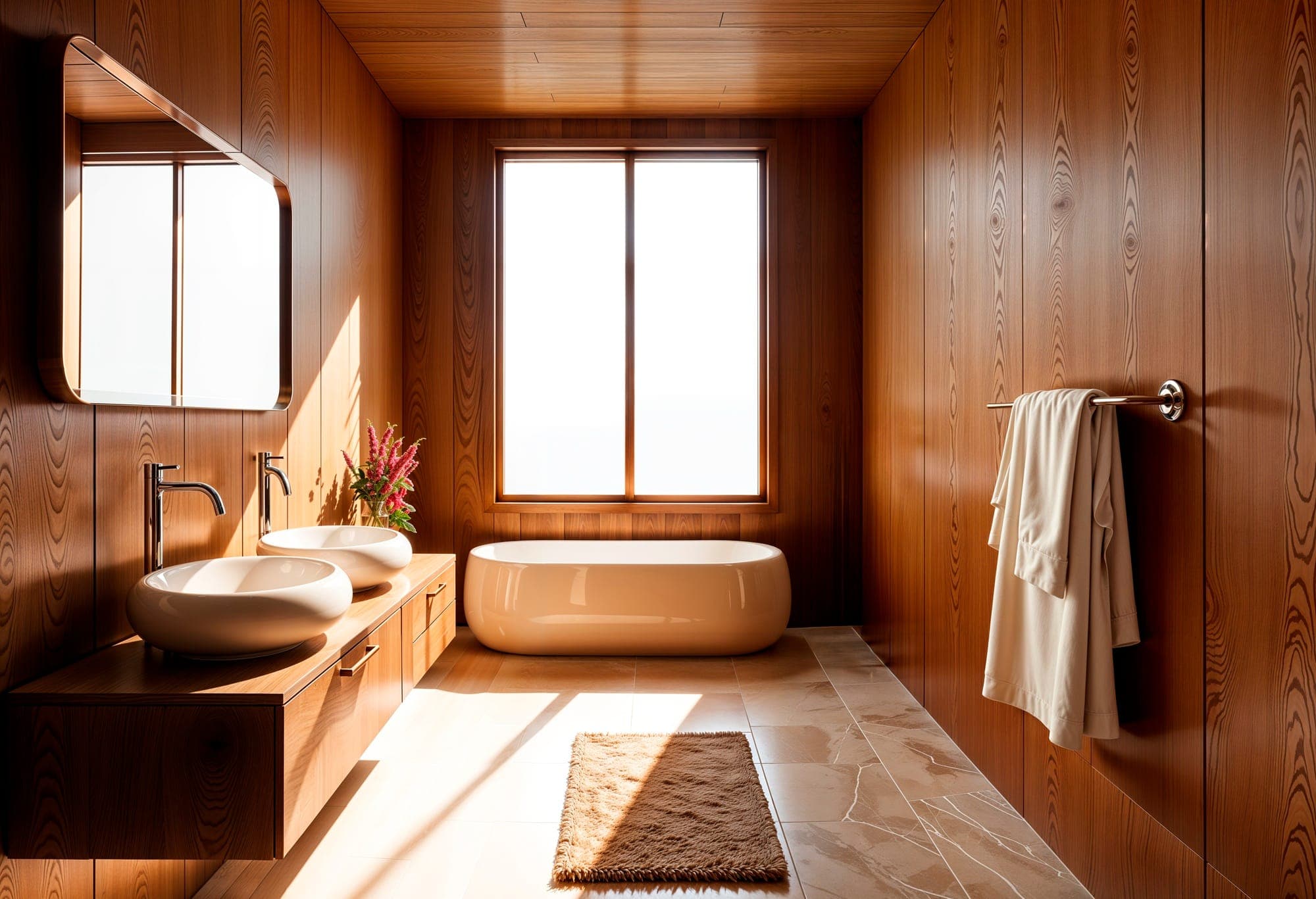
A bathroom is the hardest-working environment in a home for joinery. Water splashes, steam rises every time someone showers, and in Dubai the swing between air-conditioned interiors and humid outdoor air adds to the strain. A vanity that would last decades in a living room can swell, peel or stain within a couple of years in a bathroom if the wrong materials are used. The good news is that every common failure is preventable with the right choices at the design stage. This guide covers what to look for.
Why bathrooms are hard on joinery
Most joinery problems in bathrooms come down to moisture getting into the board. Engineered boards are stable and practical, but if water reaches an unsealed edge — around a basin cut-out, along the bottom edge of a door, or where a panel meets the floor — the board can absorb it and swell. Once swollen, it rarely returns to its original shape.
Steam is the other culprit. Warm, moist air condenses on cooler surfaces, including the inside of cabinets. Without ventilation, that moisture lingers. Joinery designed for a bathroom has to assume it will get wet and make sure water has nowhere to go.
Start with the right board
The carcass and doors of a bathroom vanity should be built from moisture-resistant board as a minimum. For areas that will see direct water exposure, more water-resistant options are available, and solid surfaces can be used for the most exposed parts. Standard board, which is perfectly suitable in bedrooms and living rooms, is the most common cause of vanity failure in bathrooms.
Just as important as the board is how it is sealed. Every edge should be edged or sealed, including edges that are never seen: the back of the unit, the underside, and especially the edges of the basin and tap cut-outs. Both faces of each panel should be finished so moisture is absorbed evenly — a panel sealed only on its visible face is far more likely to bow.
Most vanity failures start at an unsealed edge nobody looked at — usually the basin cut-out.
Choosing a finish for wet areas
The finish is the first line of defence against water:
- Melamine and high-pressure laminate are tough, water-resistant and easy to clean, with a wide range of colours and woodgrains. They are a very practical choice for family bathrooms.
- Lacquer or paint gives a seamless colour that can match tiles or walls. A good lacquer finish is washable, though edges and corners can chip with heavy knocks, so details like slightly rounded edges help.
- Wood veneer brings real timber warmth into a bathroom, but it must be properly sealed and suits well-ventilated bathrooms better than steamy family ones. Avoid placing veneer where water will stand.
We cover the trade-offs between painted and veneered surfaces in more depth in painted vs. veneered finishes. For a bathroom, the right answer often combines finishes — for example, a durable laminate inside and a lacquered or veneered front.
Worktops and basins
The worktop takes the most water of any part of a vanity. Quartz, porcelain and solid surfaces are popular because they are non-porous and easy to keep clean. Natural marble looks beautiful but is porous, so it needs sealing and can etch with some cleaning products. Whatever you choose, the joint between the worktop, the basin and the wall needs to be sealed properly, and the worktop should overhang the cabinet slightly so drips fall clear of the doors rather than running down them.
Basin type affects the joinery as well. Countertop basins sit on top and leave the worktop as one continuous surface; undermount basins give a clean look and make wiping easier; integrated basins in solid surface remove the joint altogether. Each needs a different cut-out and support detail in the cabinet, which is why the basin and taps should be chosen before shop drawings are finalised.
Wall-hung or floor-standing?
Wall-hung vanities float above the floor. They make a bathroom feel larger, make the floor easy to clean, and — importantly — keep the joinery away from water on the floor. They need a solid wall or a concealed frame to carry the weight, which has to be planned with the plumbing.
Floor-standing vanities offer more storage and suit larger bathrooms, but the bottom edges are exposed to mopping and splashes. If you choose one, raise it on a plinth or legs with a sealed, water-resistant base.
Hardware and internal details
Bathroom hardware should be corrosion-resistant. Hinges and runners from reputable manufacturers are designed for humid environments; cheaper fittings can rust or seize. Soft-close mechanisms are worth having — they stop doors and drawers slamming and protect the joinery over time.
Inside the cabinet, plan around the plumbing. Waste pipes and traps take up space, so drawers usually need a U-shaped cut-out or a shallower depth to clear them. Planning the plumbing position with the joinery, rather than after it, gives you far more usable storage. Internal organisers for toiletries and a dedicated space for a hairdryer or cleaning products make a vanity much easier to live with.
Ventilation and lighting
Even the best materials last longer in a bathroom with good ventilation. An extractor fan that runs during and after showers removes the moisture before it settles on joinery. Leaving a small ventilation gap behind or below cabinets helps too.
Lighting is a practical as well as aesthetic choice. Mirror lighting, under-vanity LED strips and lit mirror cabinets all need power and drivers concealed within the joinery, and in a bathroom they must be suitably rated for wet areas. Decide on lighting before drawings are approved so cable routes can be built in.
Design details that prevent problems
A few small details make a big difference to how long a vanity lasts:
- A worktop overhang or drip edge that sheds water away from the doors
- Sealed edges everywhere, including cut-outs and hidden faces
- A gap or sealed plinth between joinery and the floor
- Water-resistant silicone joints where the vanity meets walls and the worktop meets the basin
- Handles or finger pulls positioned so wet hands are not always touching the same painted edge
These are the kinds of details that appear on technical shop drawings and get checked before production, so problems are solved on paper rather than discovered later.
Caring for your vanity
Well-made bathroom joinery is low-maintenance, not no-maintenance. Wipe up standing water rather than leaving it to sit, especially around the basin and taps. Use non-abrasive cleaners suited to the finish, and avoid harsh chemicals on lacquer, veneer and natural stone. Run the extractor fan. If a silicone joint starts to lift or discolour, replace it promptly before water can get behind it.
Bringing it together
A bathroom vanity that lasts is designed for the conditions it will face: moisture-resistant boards, every edge sealed, a finish suited to how the bathroom is used, a non-porous worktop, corrosion-resistant hardware, and plumbing, ventilation and lighting planned alongside the joinery. Our custom joinery service covers vanities and full bathroom joinery, built in our workshop and fitted by our own team. Get an indicative price from the cost estimator, or book a consultation to talk through your bathroom.
Tell us about your space — our design team will walk you through material and finish options for your project.
Enquire Now →